
Who Is Bruce Cullen, Founder of Recover-SSD and eProvided?
In Data Recovery Since 1999. NASA Helios, Mars, JPL, the Pentagon and 361 Universities.
Bruce Cullen is a data recovery specialist who has worked in the field since 1999. He founded eProvided, and in 2011 he founded Recover-SSD, a lab that works only on solid-state storage. Along the way he recovered data for NASA's Helios mission and advised NASA and JPL on other missions.
The founder
Who Is Bruce Cullen?
Bruce Cullen has worked in data recovery since 1999. He founded eProvided, a general data recovery company, and in 2011 founded Recover-SSD to focus only on SSDs and flash. Over 27 years his work has reached NASA missions, the U.S. military, federal agencies, large companies and hundreds of universities.
Recover-SSD was founded in 2011 by Bruce Cullen, who has worked in data recovery since 1999. Before Recover-SSD he built eProvided, which he still owns and runs. Most people meet him the same way: a drive has failed, the files on it matter, and someone wants a straight answer about whether they can come back. That plain first conversation has stayed the core of his work for more than two decades, whether the drive came from a home office or from a research aircraft at the bottom of the ocean.
His focus moved to flash memory early, because flash fails in ways that spinning disks do not. A flash drive or an SSD hides a constantly changing map of where every file sits, and when that map breaks the drive can look empty while the data is still there. Explaining that difference is why this site carries guides such as how to read an SSD health warning.
NASA Helios, 2003
What Was the NASA Helios Data Recovery?
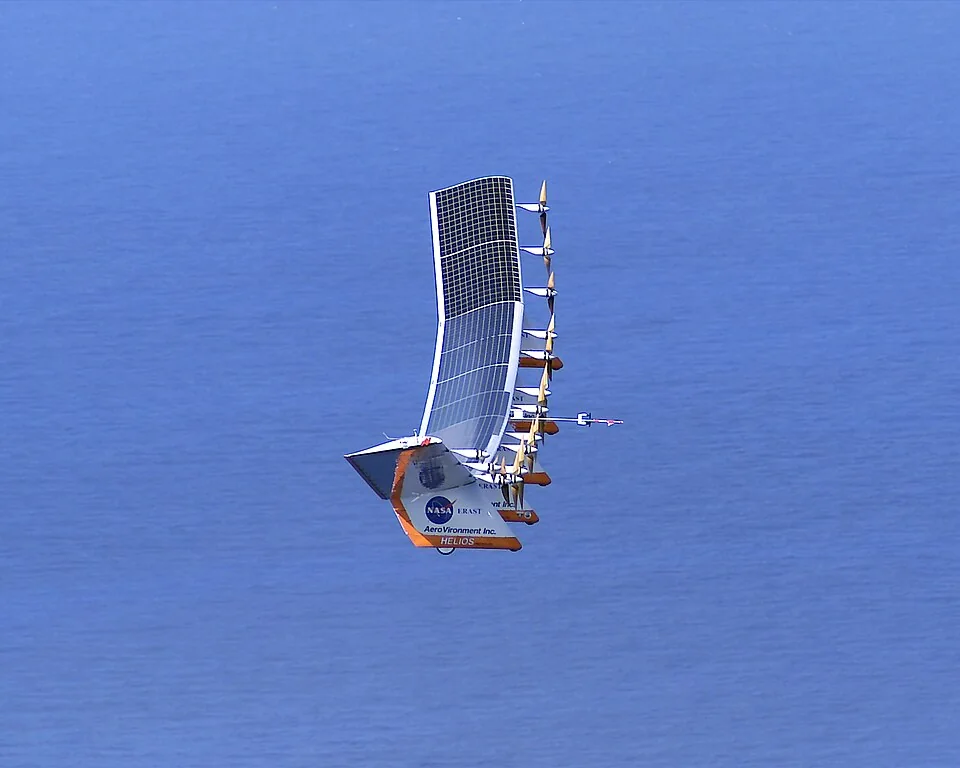
NASA's Helios Prototype, a solar-powered research aircraft, broke up and fell into the Pacific Ocean near Kauai, Hawaii, on June 26, 2003. Bruce recovered flight data from a flash memory card that came out of the wreckage after weeks in salt water.
 See it bigger
Helios was one of NASA's most ambitious aircraft: a flying wing more than 75 metres across, powered by the sun, built to fly at the edge of space. On its test flight from the U.S. Navy's Pacific Missile Range Facility on Kauai it met turbulence, broke apart and fell into the sea. NASA recovered debris from the sea.
Among it was a flash memory card holding flight data. Salt water had corroded it, and the card no longer worked as a card. Bruce recovered the raw data from it and returned it. He still keeps that card. It is the case that showed him, years before SSDs were common, that a flash device which looks destroyed can still hold its data, provided nobody writes to it first.
The Helios card also shaped the way he answers people today. The first questions are always the same: what happened to the device, has anyone powered it on since, and has anything been run on it. A card that sat in the ocean for weeks and was then left alone had a better chance than a dry drive that someone kept rebooting. That is still the most useful thing he can tell anyone holding a failed drive.
Mars, Spirit rover
What Happened When the Spirit Rover's Memory Failed on Mars?
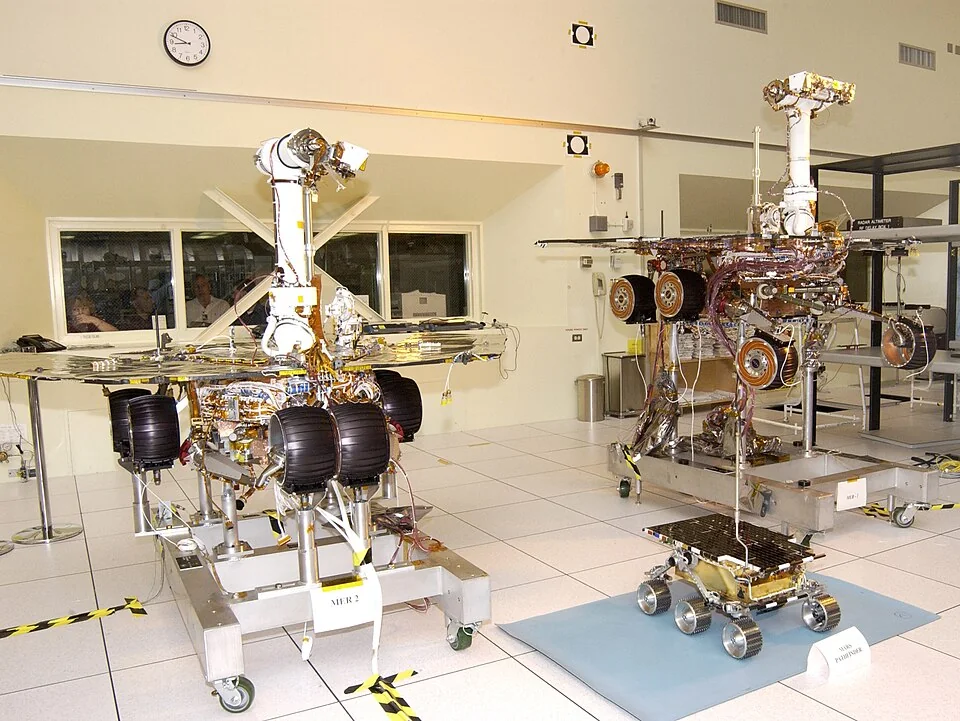
NASA's Spirit rover suffered a flash memory anomaly on Mars. NASA reached out to Bruce for his view on the flash memory failure, calling him directly on his cell phone. It is one of several times NASA and JPL people asked him about flash storage that could not simply be swapped out.
 See it bigger
Spirit and its twin Opportunity explored Mars for years longer than planned. Their onboard flash memory was a single point of failure that no technician could reach, which is exactly the kind of failure Bruce had spent his career on. When Spirit's flash memory misbehaved, NASA contacted him to talk it through. Not many labs can say a customer reached them from a mission running on another planet.
The lesson he takes from it is the same one this site repeats for every failing SSD: when flash starts to fail, the first decision matters more than any later one. On Mars that decision belonged to the mission engineers. On a desk at home it belongs to you, and our guide to a corrupted, read-only or RAW drive explains what to do first.
Spirit went on to work on Mars until 2010, six years past its planned 90-day mission. For Bruce the case is a reminder that flash memory problems are not limited to consumer drives. The same kind of chip sits in a rover, a camera, a phone and the SSD in a laptop, and it fails in the same few ways.
JPL, LDSD 2014
How Did He Support JPL's Supersonic Parachute Test?
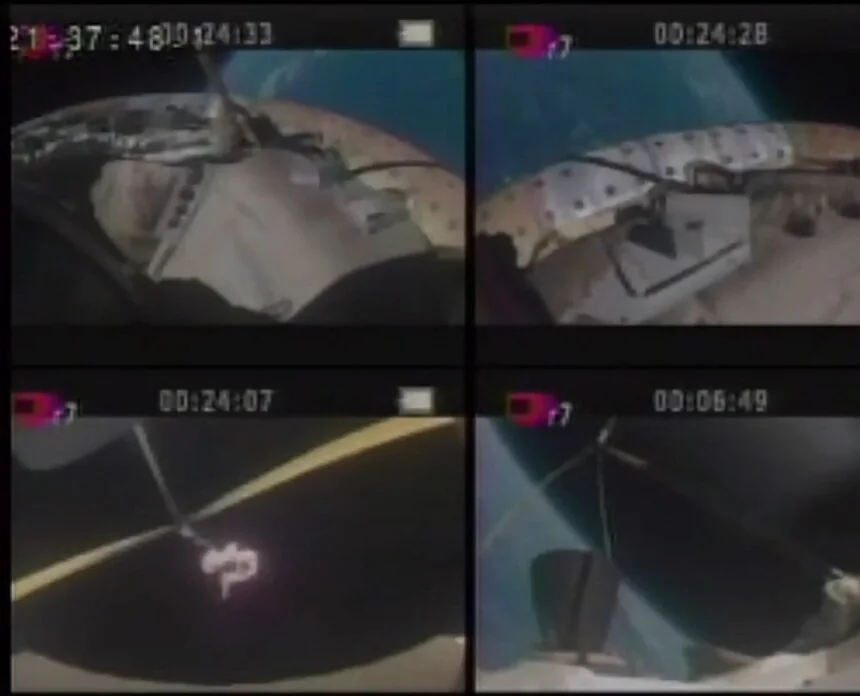
For the 2014 test flight of NASA's Low-Density Supersonic Decelerator, a Mars landing technology launched from the U.S. Navy's Pacific Missile Range Facility, JPL proposed Bruce's lab as its standby data recovery provider. In the end JPL read its own test data, so his lab was not needed that time.
 See it bigger
The LDSD test vehicle carried cameras and memory cards high above the Pacific before splashing down. Cards that land in the ocean are a familiar problem for Bruce, which is why JPL lined up his lab in advance as the fallback if the cards could not be read. He has also handled paid work for JPL directly, including analysis of memory cards from crash cameras, and has advised on NASA's DAVINCI mission to Venus.
He keeps the record straight on purpose. The LDSD data came back without him, and saying otherwise would be the kind of overstatement he does not allow on his own pages.
Work for space programs is a small share of his cases, but it set the standard for the rest: write down exactly what came in, what was tried, what came back and what did not. The same record-keeping now goes into every case report a home user or a small business receives.
U.S. Army, the Pentagon
What Did He Do for the Army's Pentagon Office?
Bruce completed a data retrieval case for the Department of the Army's Office of the Deputy Chief of Staff, G-3, at the Pentagon in Washington, D.C. The office sent him the job and followed up with a note asking for the status of the data retrieval. The recovery was a success.
The G-3 office plans and directs Army operations and training, and works from the Pentagon, room 2C349. When data from that office needed recovering, the job came to Bruce. A lieutenant colonel in the office then sent him an unclassified fax cover sheet asking him to call or email with the status of the data retrieval.
The answer was good news: the data came back. Bruce kept the fax because it marks the moment a Pentagon office trusted an independent specialist with its data.
The request itself is the same one every customer makes: can the data come back, how long will it take, and what will it cost. Government and military cases follow the same rules as every other case. The device stays confidential, nothing about its contents is shared, and the customer decides what happens next once they know what can be read. Over the years his case records have come to include units of the Army, the Navy, the Air Force and the Marine Corps, as the table below shows.
From his case records
Who Else Has He Recovered Data For?
Bruce's case records, kept through eProvided since 1999, include professionals at large companies, U.S. military units, federal and state agencies and 361 universities. Every name below comes from a real, paid case. No organization listed here endorses either company.
| Group | Examples from the records |
|---|---|
| NASA | Helios mission; personnel at Goddard, Johnson and JPL |
| U.S. military | U.S. Army, including the Office of the Deputy Chief of Staff, G-3, at the Pentagon; U.S. Navy, Naval Research Laboratory, Peterson Air Force Base, U.S. Marine Corps |
| Federal and state | CDC, USGS, Tennessee Valley Authority, U.S. Forest Service, State of Maryland, State of Kentucky |
| Companies | Professionals at IBM, GE, HP, Raytheon, Honeywell, Ford, Cisco and Chase |
| Universities | 361 universities, including Stanford and MIT |
Recover-SSD itself was founded in 2011, so most of these cases belong to Bruce's earlier and wider work through eProvided. What carries over is the experience, not the client list: the cases that reach Recover-SSD today are mostly small businesses and home users with one drive that matters.
Get in touch
How Do I Reach Bruce or the Lab?
Use the contact page or call the number at the top of any page. For a failed drive, start a free evaluation. You see the list of recovered files before you pay, and if nothing comes back you pay no recovery fee.
Questions about a drive, a guide on this site or the use of one of our images all go through our contact page for questions. If the drive has already failed, the quickest route is a free evaluation: No Data Recovered, No Data Recovery Fee.
Not sure yet? Just ask.
Tell us what the drive is doing and we’ll tell you straight whether it’s worth recovering — no charge, no sales call, usually the same day.